How much does a concrete slab cost?
Most US homeowners pay $6–$14 per square foot installed in 2026 for a plain concrete slab, with a typical 4 inch patio landing around $8–$11. A 12 × 12 ft pad is $900–$2,000; a 24 × 24 ft driveway is $3,500–$8,000.
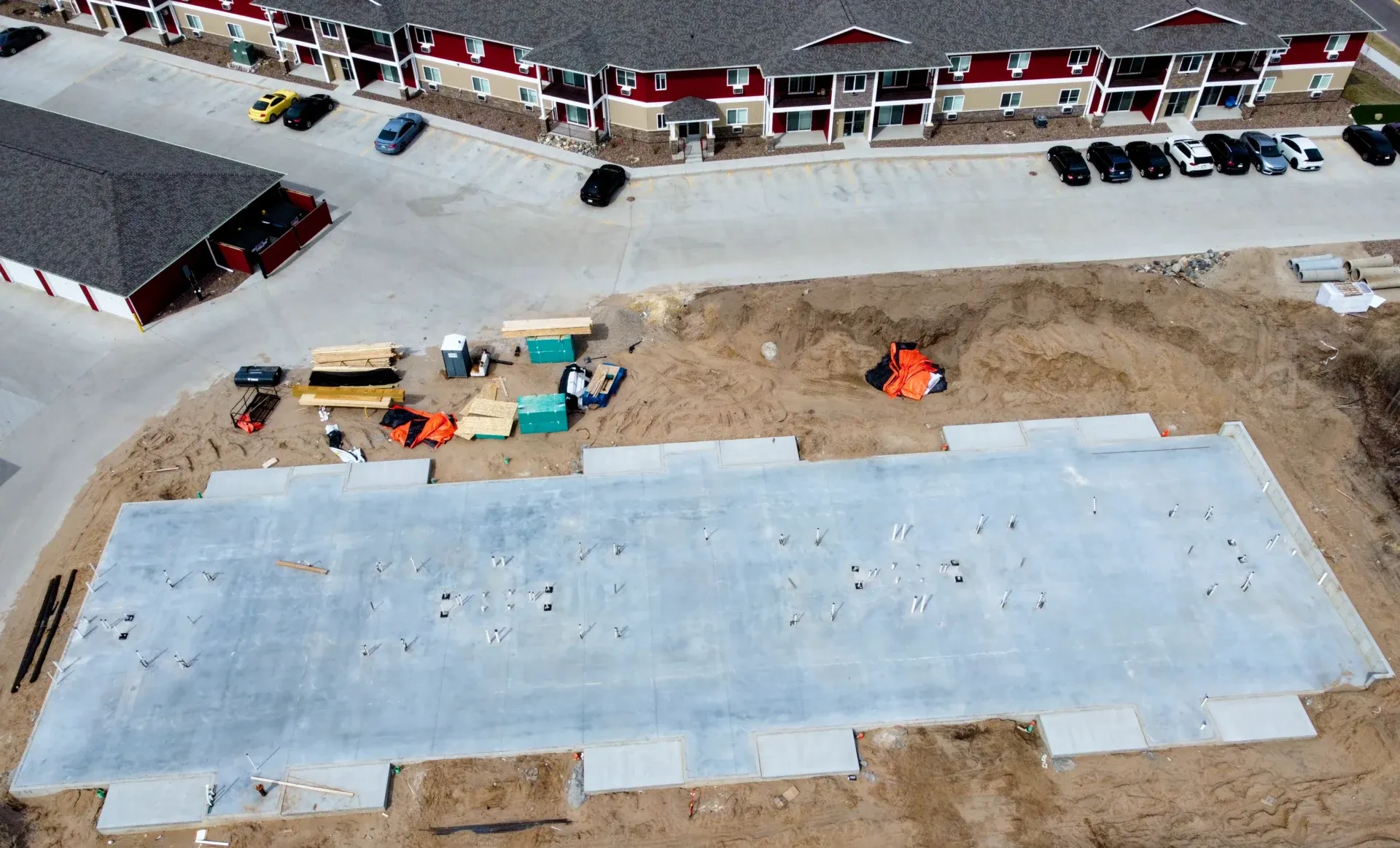
"Concrete slab" covers everything from a 40 sq ft shed pad to a 900 sq ft driveway with thickened edges and saw-cut joints. The square foot price stays in a recognisable band because the material cost per yard does not change much — what changes is how much prep, reinforcement and finishing sits on top of it. The tables below separate the three so you can see what a quote is actually charging for.
Cost per square foot by project
| Project | Typical size | Installed cost | Per sq ft |
|---|---|---|---|
| Shed pad | 10 × 12 ft (120 sq ft) | $800–$1,700 | $7–$14 |
| Patio, 4 in | 12 × 12 ft (144 sq ft) | $900–$2,000 | $6–$14 |
| Walkway, 4 in | 3 × 40 ft (120 sq ft) | $700–$1,700 | $6–$14 |
| Driveway, 5 in | 24 × 24 ft (576 sq ft) | $3,500–$8,000 | $6–$14 |
| Garage slab, 4–5 in | 24 × 24 ft (576 sq ft) | $4,000–$9,000 | $7–$16 |
| Equipment pad | 6 × 8 ft (48 sq ft) | $700–$1,400 | Minimum charge applies |
Small pours look expensive per square foot because contractors have a minimum charge of roughly $700–$1,500. The truck, the crew, the tools and the cleanup cost the same whether the slab is 48 sq ft or 400, so the minimum is spread over fewer feet.
Where the money goes
| Line item | Cost per sq ft | Notes |
|---|---|---|
| Concrete (4 in) | $1.80–$2.80 | About 1.23 cu yd per 100 sq ft |
| Gravel base | $0.50–$1.50 | 4 in compacted, 2 lifts |
| Forms and reinforcement | $0.75–$2.00 | Mesh, rebar, edge forms |
| Labour and finishing | $2.50–$6.00 | Place, screed, float, broom, joints |
| Equipment and access | $0.50–$1.50 | Pump or wheelbarrow, disposal |
Ready-mix concrete itself runs $150–$210 per cubic yard delivered in 2026, plus a short-load fee of $40–$150 on loads under 3–5 yards. A 4 inch slab uses 1.23 cubic yards per 100 square feet: about $185–$260 in concrete for a 100 sq ft pad, or roughly $2–$2.60 per square foot. Everything above that line is prep, steel, labour and finishing.
What pushes a slab to the top of the range
- Thickness. Every extra inch adds about 25% to the concrete volume. A 5 inch driveway uses 25% more concrete than a 4 inch patio of the same area.
- Reinforcement. Wire mesh is cheap and often included. A rebar grid adds $0.50–$1.50 per square foot, and engineered steel for heavy loads adds more.
- Base condition. Soft or organic soil has to be excavated and replaced. That is $2–$5 per square foot before any concrete is poured.
- Access. If the truck cannot reach the forms, you pay for a pump — usually $150–$350 per hour with a 3–4 hour minimum, or $300–$800 for a typical patio.
- Finishing. Broom finish is the baseline. Stamped concrete adds $5–$10 per square foot, integral colour $4–$8, exposed aggregate $6–$12, and a heated mat system $8–$15.
- Site slope and drainage. A slab that needs to shed water away from the house needs grading, which means more base and sometimes a retaining edge.
DIY vs professional
Concrete is one of the few trades where DIY is genuinely possible on small pours and genuinely a bad idea on large ones. The line sits around one cubic yard — roughly 45 bags of 80 lb mix, or 80 square feet at 4 inches.
| Line | DIY (100 sq ft) | Professional (100 sq ft) |
|---|---|---|
| Concrete | ~$300 in bags | ~$220 ready-mix |
| Gravel and forms | $80–$150 | Included |
| Labour | Your weekend | $250–$600 |
| Tools | $80–$150 (mixer hire, float, edger) | Included |
| Total | $450–$600 | $800–$1,200 |
The saving is real but narrow. On 100 sq ft you might keep $300–$600; on 400 sq ft, mixing and placing by hand takes multiple days and the risk of a cold joint or a bad finish grows faster than the saving. Use the concrete calculator to see how many bags your pour actually needs before deciding.
How to read a concrete quote
- Thickness and strength. A quote should say "4 inch, 4,000 psi" or similar, not just "concrete slab". Strength and thickness are separate decisions.
- Base prep. Excavation, grading and 4 inches of compacted gravel should be listed. A slab poured straight onto dirt will crack.
- Reinforcement. Mesh, rebar or fibre — and which one. "Reinforced" is not a specification.
- Joints. Saw-cut or formed, and how far apart. Control joints at 8–12 ft on a 4 inch slab are standard.
- Finish and cure. Broom, trowel or exposed; curing compound or plastic sheeting.
- Disposal and access. Who pays for the pump, the dumpster and any lawn repair.
Estimate scope and price checks
These are broad US planning ranges, not a site quote or structural specification. The total depends on thickness, strength, base preparation, reinforcement, finish, access, pumping and local minimum charges. Compare written quotes with the same slab dimensions and inclusions. Use the concrete calculator to estimate volume and bags, and the slab thickness guide for general context; local code and a qualified professional determine project requirements.
Frequently asked questions
How much does a 12x12 concrete slab cost?
A 12x12 ft (144 sq ft) slab at 4 inches thick costs roughly $900–$2,000 installed in 2026. A plain broom finish with no reinforcement on easy-access ground lands near the bottom of that range; stamped, coloured or thickened-edge work pushes it to the top.
Is a concrete slab cheaper than pavers?
Usually yes for large areas. A plain concrete slab runs $6–$14 per sq ft installed, while pavers run $10–$25 per sq ft. Pavers win on repairability and on small areas where the concrete minimum charge dominates.
How much does it cost to remove an old concrete slab?
Breaking out and hauling away concrete runs $2–$6 per sq ft, or $1,200–$2,400 for a typical 400 sq ft patio. Thick slabs, rebar and limited truck access push it higher.
Does a concrete slab add value to a house?
A driveway, patio or garage floor is one of the few exterior projects that reliably returns part of its cost at resale, because buyers read concrete as permanent and low-maintenance. A cracked, badly pitched slab does the opposite.
How long before I can walk on a new concrete slab?
You can walk on it after 24 hours and drive on it after 7 days. Full design strength takes 28 days, which is why heavy loads and vehicle traffic should wait. Hot, windy weather accelerates surface drying but not the cure.
Sources & estimate method
These figures are HomiePlan planning ranges, not a live quote or a price survey. We compare published national cost guidance with the project scope described above, then show material, labour, delivery and preparation separately where the guide supports that split. Local market, access, finish, quantities and site condition can change the final quote; confirm current prices with local suppliers and contractors.
- HomeGuide’s concrete slab cost guide — national cost context and common project cost factors.
Source ranges may use different project definitions and dates, so they are benchmarks rather than directly interchangeable line items. HomiePlan’s tables are editorial estimates; source pages do not independently validate every figure in this article.