Concrete calculators and cost guides
Concrete is sold by the cubic yard and mixed by the bag, which is why a 12 × 12 ft patio can look like a one-trip job and turn into three. Measure the pour, convert it to cubic yards, and let the calculator tell you whether you need a pallet of bags or a short-load truck.

Start with the calculator
- Concrete calculator Enter a slab or footing size to get cubic yards, bags of 50/60/80 lb mix and an estimated concrete bill.
Cost guides
- How much does a concrete slab cost? Installed cost per square foot for patios, driveways, garage slabs and shed pads, with material and labour split out.
- How many bags of concrete do I need? Bags per cubic yard for 40, 50, 60 and 80 lb mixes, plus when bags stop making sense.
- How thick should a concrete slab be? 4, 5 or 6 inches by use, plus base prep, control joints and reinforcement.
- Concrete footing sizes and cost Footing dimensions for decks, posts and additions, frost depth, and what to expect per linear foot.
Quick numbers before you start
| Item | Typical figure |
|---|---|
| 1 cubic yard | 27 cubic feet |
| 80 lb bag of mix | 0.60 cu ft — about 45 bags per yard |
| 60 lb bag of mix | 0.45 cu ft — about 60 bags per yard |
| Ready-mix concrete | $150–$210 per cubic yard delivered |
| Bagged concrete | $5–$9 per 80 lb bag |
| Slab thickness, patio or shed | 4 in |
| Slab thickness, driveway | 5 in minimum |
| Slab installed, plain finish | $6–$14 per sq ft |
| Gravel base | 4 in compacted |
| Control joint spacing | 2–3 ft per inch of slab thickness |
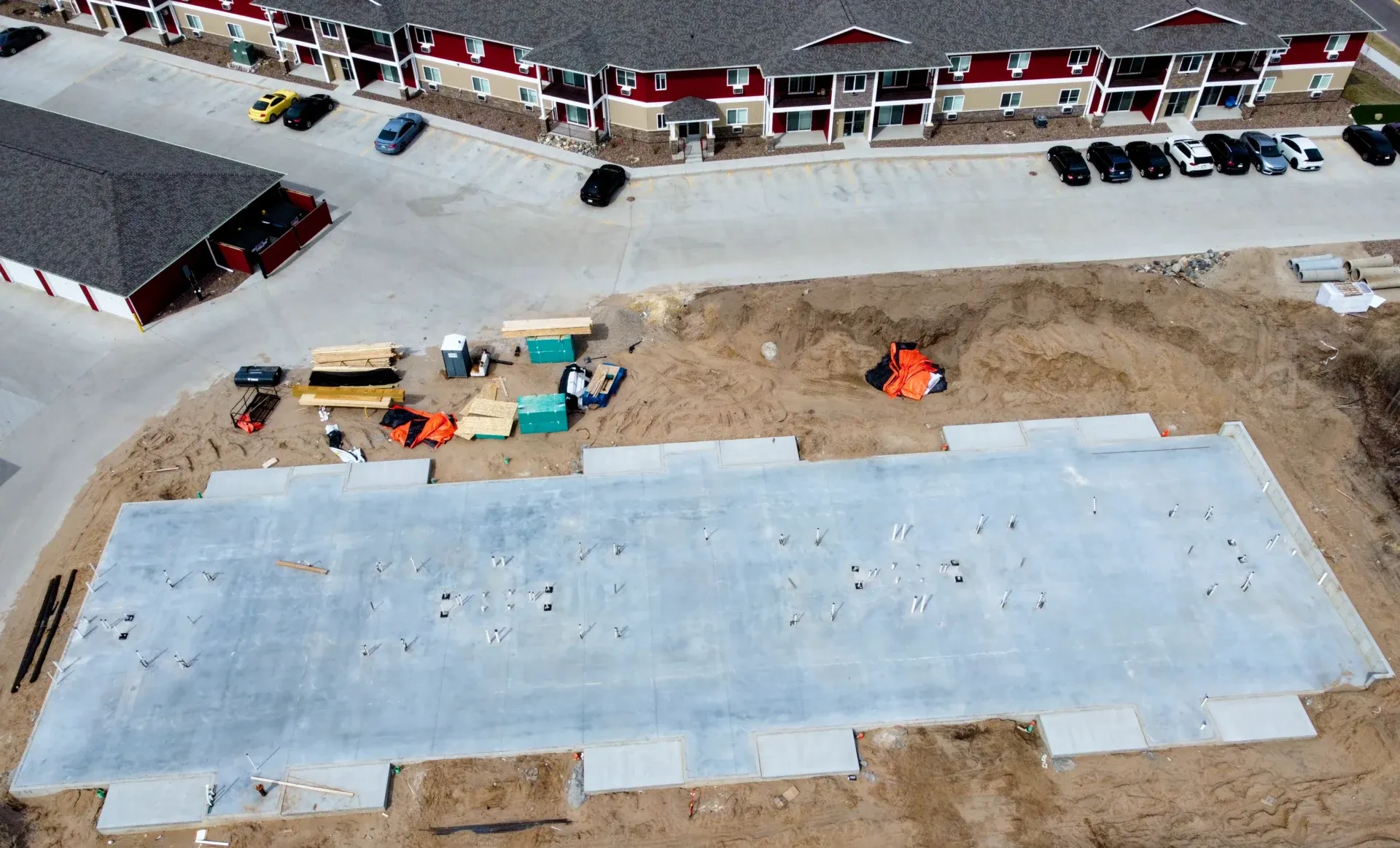
How concrete quantities work
Concrete is ordered in cubic yards. One yard is 27 cubic feet, which is enough to pour a 4 inch slab about 81 square feet in area. The conversion is always the same: area in square feet × thickness in inches ÷ 12 gives cubic feet, then divide by 27. A 12 × 12 ft patio at 4 inches is 144 × 0.333 = 48 cu ft, or 1.78 cubic yards.
Bagged mix is priced by weight, not by volume, and each bag only yields a fraction of a cubic foot once mixed. That is why a small pour looks cheap per bag and expensive per yard: 1.78 yards is 80 bags of 80 lb mix. Bags stop making sense somewhere around one cubic yard, or roughly 45 bags — above that, a ready-mix short load is cheaper and far less work.
Order 5–10% extra, never the exact calculated volume. Running short mid-pour means a cold joint — a visible seam where one batch set before the next arrived — and cold joints are permanent. Leftover concrete can always become a small pad or be dumped in the forms.
Slab or footing?
A slab is a flat plate poured over a prepared gravel base: patios, shed floors, garage floors, driveways. A footing is a deeper, narrower pour that transfers load into the ground: deck posts, porch columns, foundation walls. Slabs are calculated from area × thickness. Footings are calculated from length × width × depth, and depth has to reach below the local frost line or the ground will heave it apart in winter.
Both use the same calculator. Switch the mode at the top, and remember that the depth figure for a footing is the part buried in the ground — not the part you can see above grade.