How deep should mulch be?
3 inches for a new bed. 1–2 inches to top up an existing layer. 4 inches is the ceiling — beyond that mulch starts to do harm. Keep it 2–3 inches away from trunks and 6 inches away from the house.
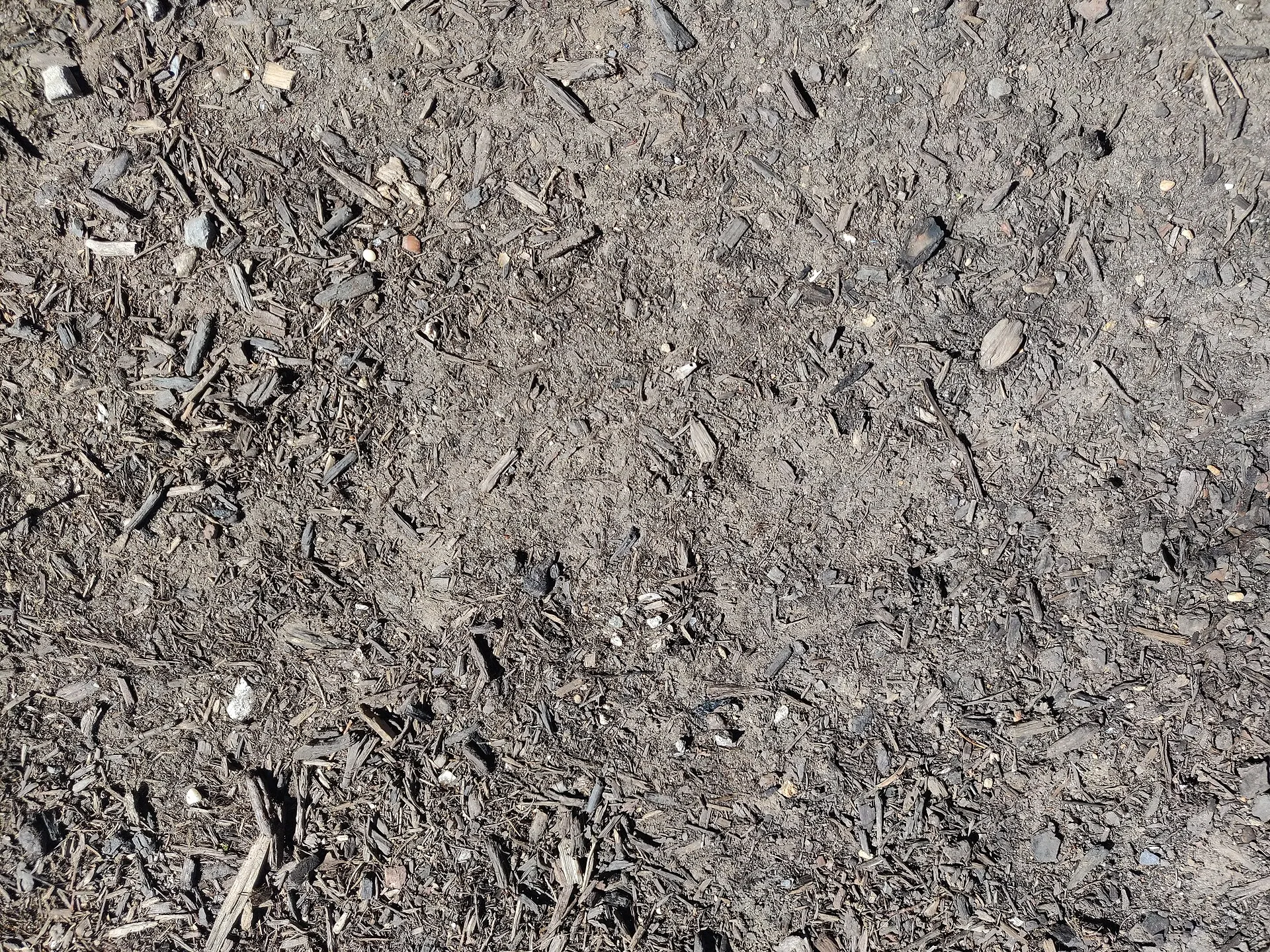
Mulch depth is the most misunderstood number in landscaping, because the consequences of getting it wrong take a season or two to appear. Too little and weeds win. Too much and the plants slowly suffocate while the bed looks tidy. The window between the two is narrow: 2 to 3 inches, with 4 as an absolute maximum for most situations.
Depth by situation
| Situation | Depth | Why |
|---|---|---|
| New bed over bare soil | 3 in | Enough to suppress weeds without starving roots |
| Top-up over existing mulch | 1–2 in | Total depth should stay near 3 in |
| Annual refresh | 1 in | Replaces what broke down over the year |
| Around trees and shrubs | 2–3 in | Deeper risks trunk rot and surface roots |
| Vegetable and annual beds | 2 in | Easy to move aside for planting |
| Play areas (wood chips) | 6–9 in | Impact absorption, not plant health |
| Slopes | 2–3 in, roughened | Deeper mulch slides; rough surface holds |
| Maximum for beds | 4 in | Above this, oxygen and water movement suffer |
Why 3 inches is the standard
Three inches is the depth where the benefits stack up without the drawbacks. It blocks enough light to stop most annual weed seeds germinating, which cuts weeding time dramatically. It insulates the top few inches of soil, keeping roots cooler in summer and slowing heat loss in winter. It limits evaporation, so beds need watering less often. And it still allows air and water to move through to the soil below.
At 2 inches you get most of the moisture benefit but weeds find gaps. At 4 inches you get slightly better weed control but start to interfere with gas exchange. The difference in material cost between 2 and 3 inches is a third — on a 300 sq ft bed that is about $15 — so there is no real saving in going thin.
What too much mulch does
- Starves roots of oxygen. Roots need air as much as water. A thick, matted layer slows gas exchange and plants decline slowly, showing yellow leaves and weak growth rather than an obvious problem.
- Sheds water. A deep layer of fine mulch can dry into a crust that repels water. Rain runs off the surface and the soil underneath stays dry even after a storm.
- Encourages fungus and mould. Constant damp at the surface is ideal for artillery fungus, slime mould and the grey-white threads of mycelium — harmless to plants, unpleasant on siding.
- Invites rodents. Deep mulch is warm, dry shelter. Voles and mice tunnel through it and chew bark at the base of shrubs over winter.
- Causes trunk rot and girdling roots. Mulch held against a trunk keeps the bark permanently wet. Roots grow up into the mulch instead of out into the soil, and eventually strangle the tree.
The "mulch volcano" — a cone of mulch piled up a tree trunk — is the most visible version of this mistake. It looks deliberate and it is slow damage. Pull the mulch back so the root flare is visible and the trunk is dry.
Depth by material
Depth is not only about the number of inches; the texture of the mulch matters too. Fine, shredded mulch knits together into a mat, so a slightly thinner layer achieves the same weed control. Chunky nuggets and bark pieces leave more air gaps, so they can be applied a little deeper but suppress weeds less effectively.
| Material | Suggested depth | Notes |
|---|---|---|
| Shredded hardwood | 2–3 in | Mats well, best all-round choice |
| Pine bark nuggets | 3–4 in | Lasts longer, weeds find gaps |
| Compost | 1–2 in | Feeds soil; breaks down in a season |
| Straw | 1–2 in | For seed cover, not permanent beds |
| Wood chips | 3–4 in | Paths and around established trees |
| Rubber mulch | 2–3 in | Play areas use 6 in for impact |
How to check the depth you already have
Push a ruler or a trowel handle straight down through the mulch until it stops at soil. Read the depth against the handle, then do it in three or four spots — beds settle unevenly, and the area near a downspout is usually thinner than the rest. If the existing layer is 2 inches or more, a 1 inch top-up is all you need. If it is under an inch, bring it back to 3.
Do this before you order, not after. It is the difference between buying 3 cubic yards and buying 6, and on a large property that is several hundred dollars. The mulch calculator has a depth field for exactly this — enter the top-up depth, not the total.
When to break the rules
- Play areas. Wood chips under play equipment should be 6 inches minimum and 9 inches for higher equipment, because the depth is for impact absorption rather than plant health.
- Erosion control on bare slopes. A 4 inch layer of shredded mulch holds soil while new plantings establish. Once the plants cover the ground, let the layer thin naturally.
- Winter protection. In cold climates, a temporary 4–6 inch mound over tender perennials is fine — but pull it back to 2–3 inches in spring before growth starts.
For pricing at your chosen depth, see how much mulch costs. The short version: a cubic yard covers 108 sq ft at 3 inches, so a 300 sq ft bed needs about 3 cubic yards, or roughly 41 bags of 2 cu ft mulch.
Frequently asked questions
Is 2 inches of mulch enough?
Yes for a top-up over an existing layer that is still partly intact. For a bare bed, 3 inches is the better target: it suppresses weeds, holds moisture and still lets oxygen reach the soil. Two inches works, but weeds push through more easily.
Can you put too much mulch on a garden bed?
Yes. Above 4 inches, mulch starts to starve roots of oxygen, shed water instead of absorbing it, and encourage fungus and rodents. Piled against trunks it also causes rot and girdling roots. More mulch is not more protection.
Do I need to remove old mulch before adding more?
Usually not. Rake it to break up any matted layer, then top up to a total depth of 3 inches. Remove it only if it has become a sour, water-repellent mat, or if it is contaminated with weeds or disease.
How far should mulch be kept from the house and trees?
Pull mulch back 2–3 inches from tree trunks and shrub stems, and 6 inches from siding or foundation walls. Mulch against siding holds moisture and invites termites; mulch against a trunk keeps bark wet and can rot it.
How deep should mulch be on a slope?
Two to three inches of shredded mulch, applied so the surface is slightly roughened rather than smooth. Nuggets and round bark pieces roll off slopes in heavy rain. Deeper mulch on a slope is more likely to slide than to stay put.