Concrete footing sizes and cost
A deck post footing is usually 12 inches across and 36 inches deep; a house strip footing is 16–20 inches wide and 8–12 inches deep. Depth is set by the frost line, width by the load — and the concrete is the cheapest part of either job.
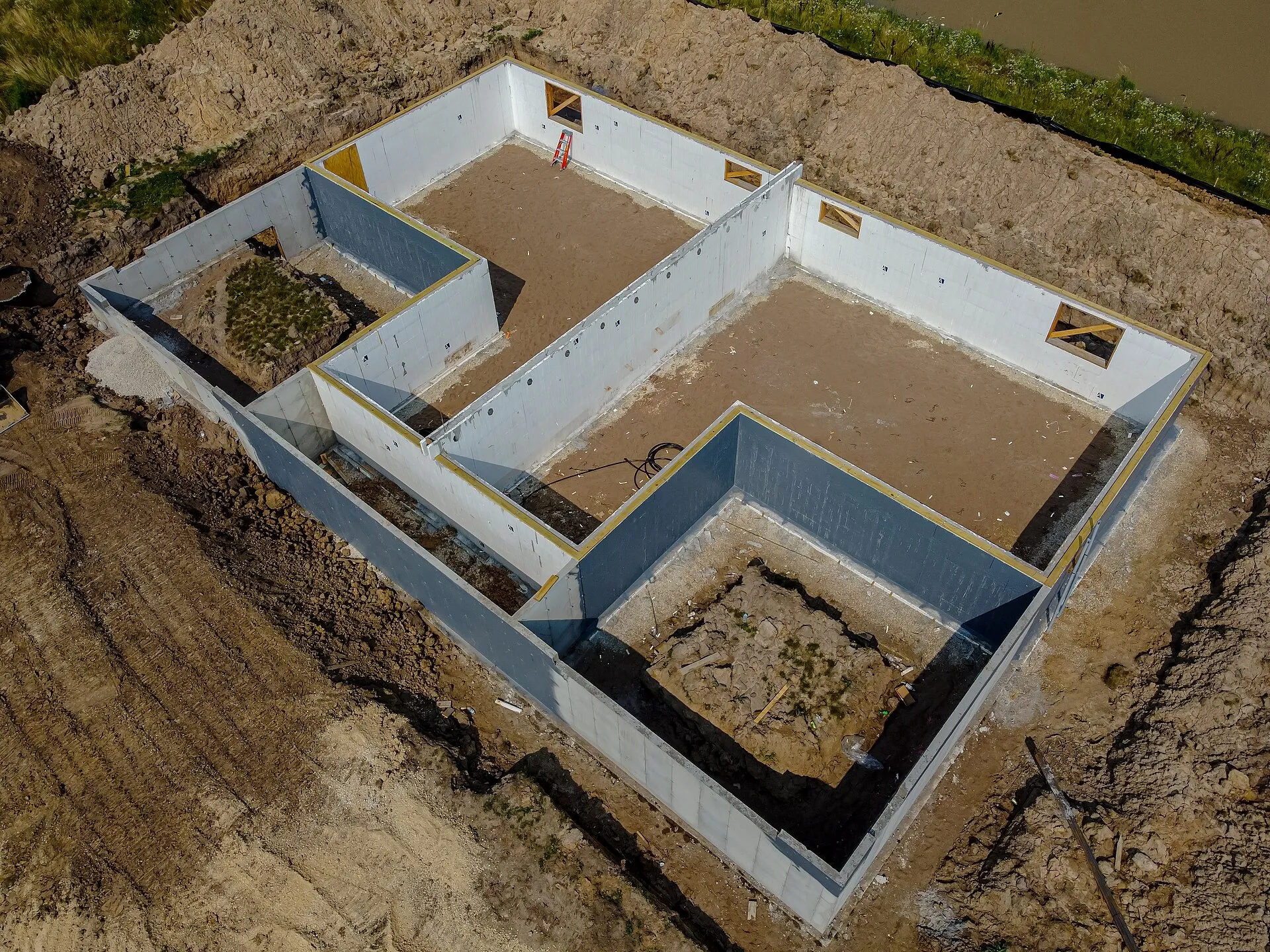
A footing and a slab do different jobs. The slab is a floor; the footing is the part that touches undisturbed ground and spreads a concentrated load — a post, a column, a foundation wall — over enough area that the soil does not settle. Get the size wrong and the failure shows up years later as a sloping floor or a cracked wall, long after the concrete has cured.
Typical footing sizes
| Application | Width / diameter | Depth | Notes |
|---|---|---|---|
| Deck post, single storey | 12 in | 36 in min | Below frost line, sonotube |
| Deck post, heavy or multi-level | 18–24 in | 36–48 in | Engineered |
| Porch column | 18 × 18 in | 12 in | On a deeper pier if frost applies |
| Garage slab edge | 12 × 12 in | 12 in | Thickened edge, integral with slab |
| House strip footing | 16–20 in | 8–12 in | Below frost, on undisturbed soil |
| Addition / bearing wall | 20 × 20 in | 12 in | Often engineered |
| Retaining wall | 12–24 in | 12–18 in | Depends on wall height and soil |
These are common residential dimensions, not a substitute for a design. Footings carrying structural loads, retaining walls and anything on poor soil should be sized by an engineer or checked against your local prescriptive code table.
Depth is about frost, not strength
In cold climates, water in the soil expands when it freezes and lifts whatever is sitting in it. A footing above the frost line gets pushed up unevenly, and the structure above it cracks. That is why footing depth is measured against the local frost line rather than against the load.
| Region | Typical frost depth | Minimum footing depth |
|---|---|---|
| Gulf Coast, deep South | 0–6 in | 12 in |
| Texas, mid-South | 12–18 in | 18 in |
| Mid-Atlantic, lower Midwest | 24–36 in | 36 in |
| Northern tier | 42–60 in | 48–60 in |
| Far north / mountain states | 60–96 in | Local code |
Frost depth is published by county building departments, and it varies more than the map suggests — elevation, soil type and snow cover all shift it. If you are pouring in a cold climate and the number is unclear, dig deeper rather than shallower.
Volume and bag count per footing
| Footing | Volume | 80 lb bags | Concrete cost |
|---|---|---|---|
| 12 in dia × 36 in | 2.36 cu ft | 4 | $25–$40 |
| 12 in dia × 48 in | 3.14 cu ft | 6 | $35–$55 |
| 18 × 18 × 12 in | 2.25 cu ft | 4 | $25–$45 |
| 18 in dia × 36 in | 5.30 cu ft | 9 | $55–$80 |
| 24 in dia × 48 in | 12.57 cu ft | 21 | $120–$180 |
Add 10% for waste and round up. For a round footing, volume is π × radius² × depth; for a square one it is length × width × depth. The concrete calculator has a footing mode that handles multiple footings at once.
Buy the tube, the rebar and the post base before you dig. A footing that is poured and then left without a post base is a footing you will drill into later, and drilling into cured concrete near the edge is how corners break off.
Installed cost
| Type | Installed cost | What it includes |
|---|---|---|
| Deck footing, 12 in | $150–$350 each | Dig, tube, rebar, concrete, bracket |
| Deck footing, 18–24 in | $300–$600 each | Larger excavation, engineered cage |
| Porch footing | $200–$500 each | Form, pour, pier |
| Strip footing, house | $15–$35 per linear ft | Excavation, forms, rebar, concrete |
| Thickened slab edge | $3–$6 per linear ft | Trench and concrete added to slab pour |
The material line is small on every one of these. Most of the money is excavation, formwork, reinforcement and inspection — which is why ten footings cost less each than two, and why a footing dug by hand in rocky ground costs more than one dug in sand.
What to check before the pour
- Bottom is undisturbed soil. Loose backfill, roots and construction debris have to come out, not be covered over.
- Depth clears the frost line. Measure from finished grade, not from the bottom of the hole you started.
- Bearings are level and aligned. A footing that is 2 inches out of line moves the post, the beam and the whole frame with it.
- Reinforcement is in the middle third. Rebar sitting on the soil does nothing; rebar sticking out the top rusts.
- Inspection is booked. Most jurisdictions require a footing inspection before the pour. Once concrete is in, the only fix is demolition.
Frequently asked questions
How big should a deck post footing be?
A single deck post usually sits on a 12 inch diameter footing at least 36 inches deep, or deeper where the frost line is lower. Loads from a raised deck can require 18–24 inch footings — that is an engineered decision, not a rule of thumb.
How deep do footings need to be?
Below the local frost line, and never less than 12 inches in any climate. Frost depth runs from almost nothing on the Gulf Coast to 48–60 inches across the northern US. Your building department publishes the number for your county.
How many bags of concrete for a deck footing?
A 12 inch diameter × 36 inch deep footing is 2.36 cubic feet, which takes about four 80 lb bags or six 60 lb bags. An 18 inch × 36 inch footing is 5.30 cubic feet, or about nine 80 lb bags.
Do I need rebar in a footing?
Yes for anything structural. A typical deck footing uses two or three #4 bars tied into a small cage, or a single bar bent into an L to tie the pier to the footing. Unreinforced concrete footings crack under eccentric loads.
How much does a concrete footing cost?
The concrete itself is cheap: $25–$70 for a typical deck footing. Installed — dug, formed, reinforced and poured — deck footings run $150–$350 each. Continuous strip footings for a foundation run $15–$35 per linear foot installed.